
California Public Adjusters for Property Damage and Insurance Claims
When a fire, storm, water leak or other loss damages your property, your insurer assigns its own adjuster to assess it. That adjuster works for the insurance company. A public adjuster works for you.
AllCity Adjusting is licensed in California and in 35 other states. We handle residential and commercial property damage claims from the first inspection through to settlement, and we work on claims that are new, underpaid, delayed or already denied.
When a wildfire or water loss runs into six figures, waiting months on your carrier is not an option. AllCity runs every California large loss claim through our own claims CRM, built in-house to keep your settlement moving.
How We Keep Large Loss Claims Moving
- In-house claims CRM: every document, deadline, and carrier response tracked in one system, not scattered across inboxes
- Large Loss focus: major fire and water claims are our specialty, not a sideline
- Steady follow-up: every deadline and carrier response is tracked, so your claim doesn’t sit waiting for the next step

Don’t Wait! Call Your Licensed California
Public Adjuster Expert Today: 844-MY-ADJUSTER
Remember, These Insurance Companies Are Not Your Friends


















Why hire a public adjuster in California?
Most property owners file a large claim once or twice in a lifetime. The insurance company handles thousands every week. That gap in experience is the whole reason public adjusters exist.
An insurer’s adjuster inspects the damage, applies the policy as the insurer reads it, and produces an estimate. Nothing about that process is dishonest, but it is one party’s reading of a contract that party wrote. If something is missed, undervalued, or classed as excluded when the policy language is arguable, the burden of noticing sits with you.
A public adjuster reads the policy independently, documents the loss in the detail a claim file needs, prepares the claim, and negotiates it. On a small, clean claim that may be unnecessary. It matters most when the loss is large, when the cause of damage is contested, when the damage is partly hidden, or when the first offer does not match what the repair actually costs.
When to call us
Call before you accept an offer, and ideally before the insurer’s inspection. Once a settlement is accepted, reopening it is difficult.
The claims where we make the most difference share a few features: the loss is substantial, or the property is commercial or multi-unit; damage is disputed, partly concealed, or spread across several building systems; the first offer will not cover the repair as scoped by a contractor; the claim has stalled, been underpaid, or been denied; or the policy has coverage you were not told applied, such as additional living expenses, business interruption, or code upgrade coverage.
You can also call us after a denial. A denial is a position, not a verdict, and it is often based on an incomplete record.
What to do in the first few days after a loss
What happens immediately after the damage often decides how the claim goes, and most of it is straightforward if you know to do it.
Make the property safe and stop further damage. Most policies require you to take reasonable steps to prevent additional loss, and failing to do so can reduce what is paid. Board up, tarp, shut off water, extract standing water. Keep the receipts; emergency mitigation is usually a covered cost.
Do not throw anything away yet. Damaged contents and removed building materials are evidence. Photograph everything before it goes, and if something has to be disposed of for health or safety reasons, document it first.
Photograph and video before repairs begin. Wide shots that establish the room, then close-ups of specific damage. Get the areas nobody thinks to photograph: attic spaces, under sinks, behind appliances, the underside of roof decking, inside cabinets.
Write down what happened while it is fresh. The date and time, the weather, when you discovered the damage, who you called, what they said. Claim files are built months later from memories that have faded.
Report the claim, but be careful about early statements. You are required to report promptly. You are not required to speculate about cause, age of the building, or prior damage. If you do not know, say you do not know rather than guessing. Early guesses become facts in a claim file.
Keep every communication. Names, dates, reference numbers, and copies of everything in writing. If a significant conversation happens by phone, follow it up with a short email confirming what was said.
Get your own repair estimate. A contractor’s scope written independently of the insurer gives you something concrete to compare the offer against.
Why Choose A Local Licensed California Public Adjuster Expert?
Our Certifications / Our Experience / Our Integrity
Licensed and Bonded in California
AllCity Adjusting holds California public adjuster license 6004559, and Andrzej Gurczak holds license 4118784. Both are active and bonded. You can check either one yourself on the California Department of Insurance register.

120+ yrs COMBINED Claim Experience
Secondly, our teams have 120+ years of combined claim adjusting experience.
In short, give us an opportunity to earn your trust.
ADJUSTING WITH INTEGRITY IS
OUR MISSION.

FAST TRACK YOUR CLAIM
Lastly, get a faster claims settlement.
Most importantly, get a team that is dedicated to you.
STAYING ON TASK AND IN CONTACT IS OUR COMMITMENT.
Case Study
Reviews & Testimonials From Our Clients
Moreover, A Company With Over 20 Reviews with a Perfect 5-Star Rating
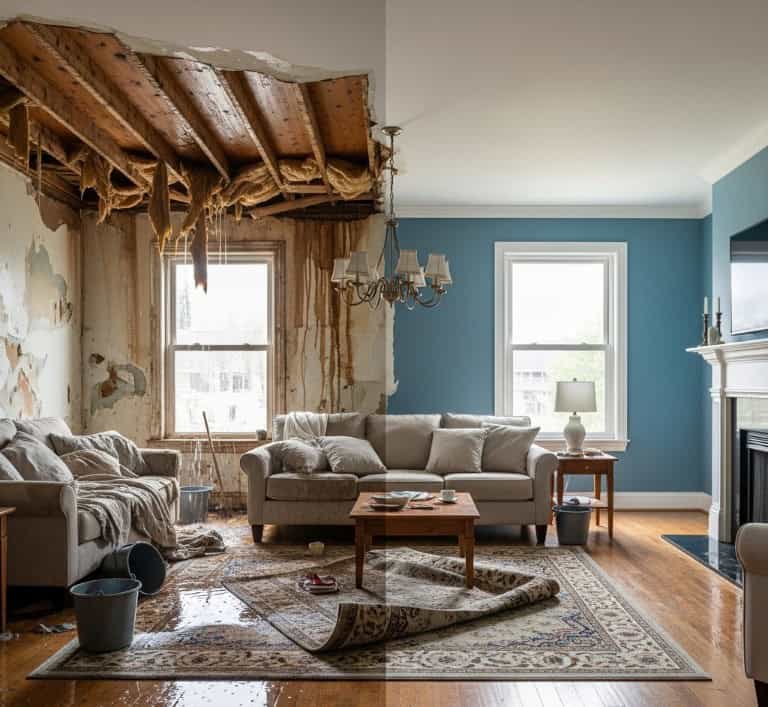
Our Public Adjuster Services in California
We handle every step of the claim, from the first inspection through to settlement.
Read the policy first
Before anything is measured, we read the policy: what it covers, what it excludes, the limits and sub-limits, the deductible, and the conditions you have to meet to keep the claim valid. Sub-limits and conditions are where claims quietly lose value, because a policy can cover a loss in principle and still cap the part that costs the most.
Inspect and document the damage
We inspect the property and document the loss to the standard a claim file needs rather than the standard a walkthrough needs: photographs, measurements, moisture readings where relevant, material specifications, and the extent of concealed damage behind finishes. Smoke, water and structural movement all cause damage that is not visible from the middle of a room.
Build the claim and negotiate it
We prepare the estimate and the supporting documentation, including scope of repair, pricing, contents, and any additional living expenses or business interruption the policy covers. Then we deal with the insurer directly, so the correspondence, the follow-up and the disagreements are ours to handle rather than yours. You stay informed and you make the decisions; you do not have to argue the technical points yourself.
Wildfire and smoke damage
Fire claims are rarely only about what burned. Smoke and soot travel, settle in ducting, insulation and contents, and cause damage that a visual inspection understates. Contents claims after a fire are frequently the most undervalued part of the file. We have written a longer guide to this: California wildfire damage and your insurance claim.
Water, storm and hail
Water damage claims turn on cause and timing, because most policies distinguish sudden and accidental discharge from gradual leakage and from surface flooding. That distinction decides whether the claim is paid. Roof and envelope damage from wind and hail is often partial and progressive, and is commonly attributed to age or wear rather than the event. Establishing what the storm caused, and what was pre-existing, is the substance of the claim.
Earthquake and flood, and why they usually sit outside your policy
Standard California homeowners and commercial property policies do not cover earthquake or flood damage. Both are bought separately: earthquake as its own policy or endorsement, with most California residential insurers offering cover through the California Earthquake Authority, and flood through the National Flood Insurance Program or a private flood carrier.
There is a California rule worth knowing here. Insurers that sell residential property cover in California are required by law to offer you earthquake cover when the policy is first sold, and again every two years after that. If you have held a policy for a while, you have almost certainly been offered it. Whether you accepted is what decides the claim.
Commercial and large-loss claims
Commercial claims add moving parts that residential claims do not have. Business interruption covers lost income while the property cannot operate, and it is calculated from financial records rather than from the building. Extra expense covers the additional costs of continuing to trade, and is frequently overlooked entirely. Code upgrade coverage matters because a repair often cannot legally be done to the original specification once a building is opened up. We handle commercial and multi-unit property claims, and large loss is where a public adjuster is most likely to change the outcome.
Denied, underpaid and delayed claims
If a claim has been denied, we look at the stated reason and test it against the policy language and the evidence. Underpayment is more common than outright denial and harder to spot, because a payment feels like an acceptance. The usual causes are a scope that misses concealed damage, pricing that does not reflect current local labor and materials, depreciation applied more aggressively than the policy supports, or recoverable depreciation never actually claimed back after the repair.
Licensed California Public Adjuster Services
Licensed, bonded, and accountable to the California Department of Insurance
FAQs About Our Services in California
What does a public adjuster actually do?
We represent you rather than the insurer on a property damage claim: reading the policy, documenting the loss, preparing the claim and negotiating the settlement.
Is a public adjuster the same as the adjuster my insurer sent?
No. The insurer’s adjuster is retained by the insurance company. A public adjuster is retained by the policyholder. Both may be licensed and competent; they represent different parties.
Can you help if my claim was already denied?
Often, yes. We examine the reason given and test it against the policy wording and the evidence in the file. Denials rest on a record, and records can be incomplete.
Can you help if I already accepted a settlement?
Sometimes, and it depends on the policy and the circumstances. If additional damage is found, a supplement may be available. Accepting a settlement makes it harder, which is why it is worth calling before you accept rather than after.
How long does a claim take?
It depends on the size and complexity of the loss and on the insurer. We will give you a realistic view once we have seen the policy and the damage, and we will not promise you a date we cannot control.
What is the difference between actual cash value and replacement cost?
Actual cash value pays what the damaged property was worth at the time of loss, with depreciation deducted for age and wear. Replacement cost pays what it costs to replace it now. Many policies pay actual cash value first and release the withheld depreciation after the repair is completed and documented. That withheld amount is frequently never claimed back, which is one of the quieter ways claims lose value.
My insurer says the damage is wear and tear, not the storm. Is that final?
No. Cause of loss is a technical question and it is often the whole disagreement. It is answered with evidence: the condition of surrounding materials, the pattern and direction of the damage, weather records for the date, and the age and condition of the building system involved.
Will hiring a public adjuster slow my claim down?
It should not. A prepared claim usually moves more predictably than one assembled piece by piece, because the insurer receives the documentation it needs in one go rather than requesting it in rounds.
Do you work with my contractor?
Yes, and it helps. A contractor scopes and prices the repair; we handle the policy, the documentation and the negotiation. The two jobs are different and they work better together.
Do I have to use a public adjuster?
No. You can handle your own claim. On a straightforward loss that is often the right call. Consider a public adjuster when the loss is large, the cause is contested, or the offer does not match the repair.
How do you charge?
We explain how our fee works before you sign anything, in writing, and you will have the agreement in front of you before you commit to it. If we do not think a public adjuster will improve your outcome, we will say so. Not every claim needs one.
What do you need from me to start?
The policy, the claim number if one exists, whatever photographs you have, and access to the property. We will tell you if anything else is needed once we have read the policy.
Our California Service Areas
We serve clients across the state, including
Get Your Free Claim Review: Secure, Simple, and Swift
Our public insurance adjusters serve property owners across the states we are licensed in. Call us at 844-MY-ADJUSTER for a free review of your insurance claim.
